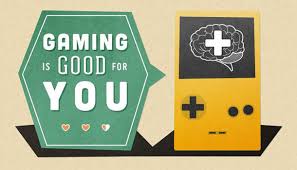
In the first article I decided to reflect on this week, titled “4 Reasons Video Games Are Good For Your Health (According To American Psychological Association)”, we learn about ways video games can actually be beneficial to peoples health. Typically, we are told video games effect our health negatively and are told to be careful playing them, however there are now ways to make video games beneficial to our health. The researchers of this experiment look at four different areas: cognitive, motivational, emotional, and social. For cognitive, researches found that “first person shooters” actually had “faster and more accurate attention allocation, higher spatial resolution in visual processing, and enhanced mental rotation abilities”. This shows that playing video games helps kids to work on their processing and reactions times, and may actually improve these and make them faster. For motivational, researches found that kids become more motivated through video games. With rewards (such as points or coins) kids want to finish the game and want to succeed in it, making them motivated to complete these goals. This then also translates to reality because through hard work, they realize there is a reward in finishing whatever task is in front of them. With emotional behaviors, it was stated that “Gaming may be among the most efficient and effective means by which children and youth generate positive feelings”. Kids learn to accept, solve problems, and be appraised in the games, which has been shown to decrease depression in children. The last is social, while most people think that video games cause children to be less social, this study shows otherwise. Kids will log on and want to play with their friends and people around the world. Yes, these kids are usually not physically with their friends, they are still having social interaction over the gaming system with the friends. This helps kids to develop a sense of social awareness and create connections with other kids.

For the second topic during weeks 5 & 6 I chose to watch the video by Wise Guy (Guy Kawasaki) about what is important in social media to create a strong platform and how to fix our social media accounts so that we have a strong platform. Kawasaki begins by saying the way our profiles are set up it the most important thing. He compares eHarmony and tinder, where eHarmony has many different levels to the profile and you can find a lot of information on someone, whereas tinder is based on a yes or no if you find someone attractive or not. We want to be interesting right off the back to people, or else we may not catch their eye and attention. He then transitions into how our avatars may make or break our accounts. He says we want to be “likable, trustworthy, and competent”, not just “interesting”. We can do this by having our avatar be only a picture of us, with good lighting, and a smile. Next, Kawasaki talks about our cover photos, saying that they are very different from our avatars. Unlike our avatars, our cover photos are supposed to make us seem interesting! He claims our cover photos should tell our story and about our lives, but should also not be too colorful. The color may take away from our avatars. Kawasaki closes his video with the last step, which is to make sure our information on our profile is up to date. This shows we are active on our accounts can give people a look into our lives.

The beginning of this video, “Healthcare Analytics for Everyone”, talks about how there are two sides to working in a healthcare system, such as a hospital. While nurses and doctors are good at their jobs and make patients happy, they also have many struggles that come with working with the healthcare system. For example, finance. While doctors always try to get the best equipment for their patients, they also have to be aware of a specific amount they can not go over. This could be buying the best brands but limiting resources, or buying lesser brands in in greater numbers. Many workers are looking into the assistance of healthcare analytics. Companies like these are filled with people who understand the issue in the healthcare system and are trained to help. Their focus is to collect data and use it to implement ways to help, instead of having insane amounts of data just sitting somewhere not being put to any use. After processing the information into a plan, they give it to the hospital employees and send them a plan so that they are not only guided but also informed about what is a smart investment and what is not. This also gives the employees the confidence to make decisions and know that they have a support system behind them.

 Rosespuhlerhealth